


Home » News » Other news » 30 years ago, the era of low-floor vehicles began in Hradec
30 years ago, the era of low-floor vehicles began in Hradec
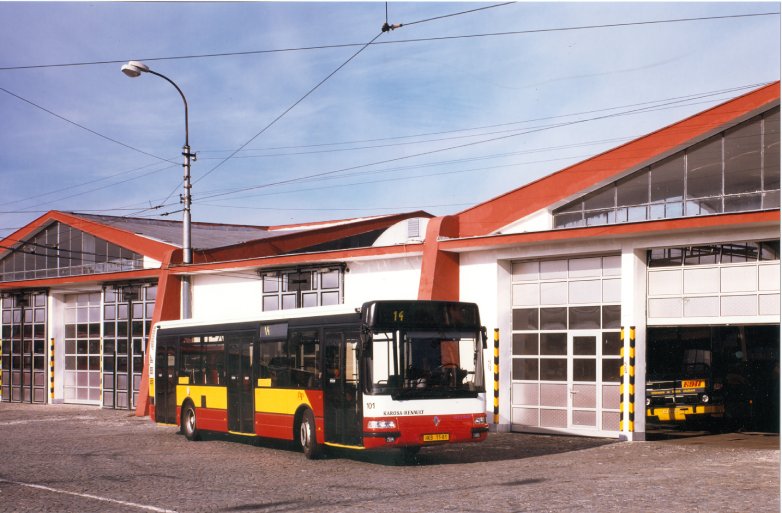
In 1996, the Public Transit Company of the City of Hradec Králové embarked on a path that gradually led to a fully low-floor vehicle fleet.
Today we take low-floor buses and trolleybuses for granted as a standard part of public transport. Thirty years ago, however, they represented a significant technological innovation, and their acquisition marked a crucial decision in the renewal of the fleet.
The year 1996 marked a fundamental turning point in the history of Hradec Králové buses. The first low-floor vehicles began to appear on the Czech market, and the transport company faced the question of whether to continue purchasing conventional buses during the next fleet renewal or to bet on the then-new concept. The decision was not easy. At that time, a low-floor bus cost approximately twice the price of a standard vehicle.
The solution became a combination of two paths. Some of the older buses underwent general overhauls that extended their service life and were cheaper than purchasing new vehicles. The saved funds could then be used by the company specifically to purchase more modern equipment. Thus, the first six Renault low-floor solo buses headed to Hradec Králové. According to memories from that time, this was also the first such collection of vehicles in the Czech Republic.
The decision was not obvious even from the perspective of choosing the manufacturer. At the same time, a Czech low-floor bus was also being prepared, and there was pressure to purchase a domestic product. However, the Hradec Králové transport company decided in favor of the already available French Renault vehicles. According to witnesses, subsequent development confirmed that in terms of reliability and the vehicle's readiness for regular operation, it was the right choice.
The first six buses were not just a one-time experiment, however. Starting in 1996, the transit company continued to purchase low-floor vehicles for future acquisitions. Their share in the fleet thus gradually grew, until a low floor became the standard on all lines.
Old-timers still remember the days when low-floor connections had to be specially marked in timetables. Passengers thus knew in advance which specific connection would offer easier boarding. As the number of these vehicles grew, they were gradually concentrated on entire routes. Eventually, the marking lost its meaning—low-floor vehicles were everywhere.
Over three decades, what was once a technical novelty has become an absolute standard. The 1996 decision thus triggered one of the most significant transformations of Hradec Králové's public transport in recent decades. It brought more comfortable travel not only for people with reduced mobility, but also for seniors, parents with strollers, and passengers with luggage. What was a bold step in fleet renewal thirty years ago is taken for granted today.